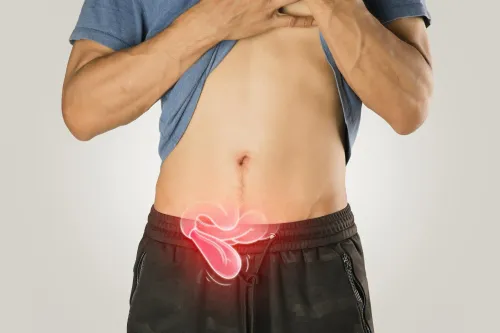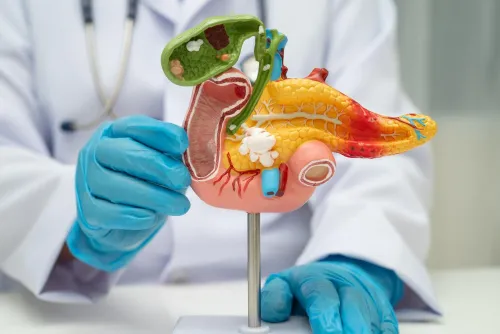
Rectal bleeding, anal pain, swelling, discharge, or a change in bowel control can come from several different disorders, and the same symptom does not point to the same operation. By the end, you will know how common conditions differ, which warning signs need urgent attention, what examinations may be used, and how surgeons weigh recovery, recurrence, and continence risks when choosing treatment.
Key takeaways
- Persistent or unexplained rectal bleeding needs medical assessment.
- Severe pain, fever, swelling, or pus warrants urgent evaluation.
- An examination identifies the disorder before surgery is considered.
- Abscesses and fistulas require different operations from hemorrhoids or fissures.
Which anorectal disorder best matches your symptoms?
Bright-red blood, pain, or a lump does not identify the disorder by itself. Bleeding that persists, recurs, or has no clear explanation needs assessment; finding hemorrhoids does not rule out a colorectal cause.
| Condition | Clues that separate it from similar problems |
|---|---|
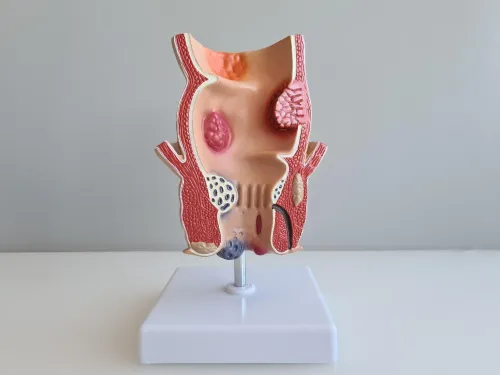
| Hemorrhoids | Bright-red blood, itching, or a lump; internal hemorrhoids often bleed without severe pain, while external thrombosis causes a suddenly tender lump. |
| Anal fissure | Sharp, tearing pain during bowel movements that can continue afterward, with a small streak of blood. |
| Fistula-in-ano | Recurrent swelling that bursts and drains pus, then settles and returns through a persistent external opening. |
| Perianal abscesses | Constant, worsening throbbing pain, tenderness, swelling, and sometimes fever; drainage is usually needed rather than antibiotics alone. |
| Rectal prolapse | A moist red mass comes through the anus during straining, often with mucus, incomplete evacuation, or reduced bowel control. |
| Pilonidal disease | Painful swelling or drainage in the cleft above the anus, usually separate from the anal opening. |
| Anal stenosis | A tight anal canal causes narrow stools, straining, incomplete emptying, and pain; it does not usually cause pus or fever. |
A prolapse can be mistaken for hemorrhoids, and an abscess can precede a fistula. Seek prompt assessment for fever with anal swelling, severe constant pain, heavy bleeding, black stools, dizziness, or inability to pass urine.
When do anorectal symptoms need urgent assessment?
Seek emergency assessment for heavy or persistent bleeding, black stools, faintness, severe constant anal pain, or a rapidly enlarging painful lump. Do not assume bright-red blood comes from hemorrhoids; recurrent or unexplained bleeding may need colon evaluation, even when hemorrhoids are visible.
| Symptom combination | What it may signal | Action |
|---|---|---|
| Fever with anal pain or swelling, pus or foul discharge | Perianal abscess or spreading infection | Same-day assessment; an abscess usually needs prompt drainage, not antibiotics alone |
| Bleeding with dizziness, weakness, fast heartbeat, or clots | Significant blood loss | Emergency assessment |
| Black stools, vomiting blood, or upper-abdominal symptoms | Digestive-tract bleeding higher than the anus | Emergency assessment |
| New inability to control stool or gas, especially with leg weakness or numbness | Nerve or sphincter dysfunction | Prompt assessment; emergency care if sudden |
| Inability to urinate, painful bladder fullness, or no urine after anorectal surgery | Urinary retention | Urgent assessment, particularly after spinal or epidural anaesthesia |
Arrange prompt review for a persistent lump, worsening pain, recurrent discharge, or bleeding that continues beyond a brief episode. After surgery, untreated urinary retention can overdistend the bladder and requires prompt treatment.
What happens during the examination before surgery?
The examination maps the visible problem and disease hidden above or within the sphincter. Those findings determine whether surgery is needed and which tissues must be protected.
- Inspection shows fissures, hemorrhoids, skin openings, pus, swelling, scarring, prolapse, or narrowed skin.
- A digital rectal examination assesses tenderness, sphincter tone, a mass, induration, stenosis, and sometimes an internal fistula opening.
- Anoscopy views the anal canal directly, helping identify internal hemorrhoids, fissures, bleeding points, and inflammation.
- Proctoscopy examines farther into the rectum for lesions, inflammation, or another bleeding source.
- Colonoscopy evaluates the entire colon when bleeding is persistent, recurrent, unexplained, or accompanied by risk factors; finding hemorrhoids does not exclude polyps or colorectal cancer.
- Pelvic MRI maps recurrent, branching, high, or complex fistulas, including hidden abscesses and the amount of sphincter involved.
- Endoanal ultrasound shows the internal and external sphincter layers, helping plan treatment for fistulas, abscesses, and continence problems.
- Examination under anaesthesia allows a painless, thorough assessment when spasm, severe pain, or complex anatomy prevents adequate office examination. It can locate hidden openings and define disease extent.
Crohn’s-associated fistulas need coordinated medical treatment, because repeated surgery alone may not control the disease.
When is non-surgical care no longer enough?
Symptoms that settle with bowel-regulation, topical treatment, or prescribed medication usually support continued non-surgical care. Persistent symptoms despite a properly completed course, recurrent symptoms after temporary relief, or symptoms lasting weeks and disrupting work, sleep, exercise, or bowel movements shift the decision toward intervention.
| Finding | Continue non-surgical care | Consider an operation |
|---|---|---|
| Bleeding and anemia | Brief, explained bleeding with normal blood count | Ongoing bleeding, iron-deficiency anemia, or bleeding without a clear anorectal cause |
| Abscess | No collection, fever, or spreading swelling | A confirmed abscess needs drainage; prolonged packing is not routinely helpful |
| Prolapse | Tissue reduces easily and symptoms remain minor | Rectal prolapse that stays outside, bleeds, ulcerates, or causes leakage |
| Medication response | Symptoms improve and remain controlled | Failed medication, repeated flares, or dependence on escalating treatment |
| Fistula anatomy | A simple, low tract with controlled drainage | Branching, high, recurrent, or sphincter-involving disease; MRI or examination under anaesthesia may guide staged treatment |
A loose seton can keep a fistula draining without curing it; later treatment depends on sphincter involvement, continence, and Crohn’s disease. Surgery becomes reasonable when disease threatens continence, causes repeated infections, or imposes a daily burden you cannot accept. Persistent bleeding still needs appropriate colon evaluation rather than automatic attribution to hemorrhoids.
How do procedures compare for hemorrhoids and anal fissure?
Rubber-band ligation, sclerotherapy, and infrared coagulation suit selected internal hemorrhoids, while hemorrhoidectomy suits bulky, prolapsing, or mixed internal–external disease. The less invasive options usually hurt less and require less downtime, but recurrence and repeat treatment are more common.
| Option | Main advantage | Main trade-off and best fit |
|---|---|---|
| Rubber-band ligation | Office treatment with limited recovery | Usually for grade I–II and selected grade III internal hemorrhoids; repeat treatment and recurrence are common |
| Sclerotherapy | Simple injection treatment with little downtime | Best for smaller bleeding internal hemorrhoids; less effective for substantial prolapse |
| Infrared coagulation | Office treatment with mild recovery | Useful for small grade I–II hemorrhoids; symptoms may return and several sessions may be needed |
| Hemorrhoidectomy | Most durable and removes external disease | More pain and slower recovery; used for large external components, mixed hemorrhoids, or advanced prolapse |
| Stapled hemorrhoidopexy | Less early pain than excision | Does not remove external hemorrhoids and has higher long-term recurrence |
| Fissure medicines | Avoids an operation | Fiber, fluids, stool-softening treatment, and topical nitroglycerin or calcium-channel blockers can heal fissures, but recurrence is more common |
| Botulinum toxin | Relaxes the internal sphincter without cutting it | Healing is less durable and repeat injections may be needed |
| Lateral internal sphincterotomy | Healing commonly exceeds 90% for chronic fissure | Dividing sphincter muscle can cause gas or stool-control problems; tailored division reduces risk |
Before choosing, ask Dr Mayur Porwal 08042753618 to document the hemorrhoid grade, external component, fissure duration, and continence risks.
Related services
Proctology surgery Proctology is the medical specialty that deals with diseases of the rectum, anus, and colon. View service → |
piles and fissure surgery Piles (Hemorrhoids) and Fissures (Anal Fissures) are common anorectal conditions that can cause pain, bleeding, and discomfort. View service → |
Why do abscesses, fistulas, and complex disease need different operations?
1. An abscess usually needs abscess drainage because antibiotics alone cannot empty a trapped pocket of pus. Delaying drainage lets infection spread and pain worsen. The cavity is left to heal; routine prolonged packing is not clearly beneficial and can add pain.
2. A fistula is a tunnel that may remain after the abscess settles, so treating it during acute infection can be unsafe or inaccurate. After drainage, examination under anaesthesia or pelvic MRI can show the internal opening and sphincter involved. A simple, low tract may suit fistulotomy, which opens the tunnel but divides limited muscle.
A loose seton keeps a complex tract draining as a staged treatment rather than reliably curing it.
3. If cutting the sphincter threatens continence, surgeons may choose an advancement flap or LIFT, depending on anatomy, previous operations, continence, and Crohn’s disease. High, branching, recurrent, or anterior fistulas need careful planning; Crohn’s disease also requires medical treatment. Recovery varies: sphincter-preserving procedures protect bowel control but can recur, while fistulotomy often heals more predictably.
Anaesthesia, pain, or swelling can cause urinary retention, so inability to pass urine after surgery needs prompt medical attention.
Frequently asked questions
Which anorectal disorder best matches your symptoms?
Bright-red bleeding, pain, lumps, itching, discharge, and altered bowel movements can occur with several disorders. Symptoms alone cannot confirm hemorrhoids, fissure, abscess, fistula, or another colorectal cause; examination is needed.
When do anorectal symptoms need urgent assessment?
Seek urgent assessment for severe or rapidly worsening pain, fever, a swollen tender lump, pus, heavy bleeding, dizziness, or difficulty passing urine or stool.
What happens during the examination before surgery?
A clinician reviews your bleeding, pain, bowel habits, medical history, and previous treatment, then examines the anus and surrounding skin. A digital rectal examination or anoscopy may be used when appropriate.
When is non-surgical care no longer enough?
Surgery is considered when symptoms persist despite appropriate care, the disorder keeps recurring, complications develop, or the condition requires drainage or repair.
How do procedures compare for hemorrhoids and anal fissure?
Hemorrhoid procedures remove, shrink, or reposition swollen tissue. Anal fissure treatment first targets spasm and healing; persistent fissures may need a procedure that relaxes the internal anal sphincter.