Surgery becomes urgent when the appendix may have perforated, infection is spreading, or observation cannot safely control the disease. You will learn how doctors confirm appendicitis, when antibiotics are reasonable, what changes the decision for higher-risk patients, and what recovery requires.
Key takeaways
- Immediate surgery is crucial when the appendix has ruptured or causes widespread infection.
- Antibiotics may suit selected uncomplicated cases after imaging and surgical review.
- An abscess often needs antibiotics and drainage before delayed appendix surgery.
- A normal-looking appendix prompts surgeons to inspect nearby organs for another cause.
How do doctors confirm appendicitis and identify an emergency?
Acute appendicitis diagnosis combines your appendicitis symptoms with examination, observations, blood tests, urine test, and imaging. No single result settles the diagnosis.
1. Doctors assess the pain pattern, especially worsening right-lower abdominal pain, tenderness, guarding, or abdominal rigidity. They repeat abdominal examinations because early findings can change. They also check temperature and pulse for fever, dehydration, or deterioration.
2. Blood tests measure the white-cell count and inflammatory markers such as C-reactive protein. A normal white-cell count does not exclude early appendicitis, and raised inflammation alone does not prove it. A urine test helps identify urinary infection or a stone that can mimic appendicitis.
3. Ultrasound for appendicitis is often first in children and pregnancy. Adults commonly need a CT scan for appendicitis, usually with intravenous contrast, when there is no contraindication. CT can show an inflamed appendix, perforation, abscess, or another cause.
Seek immediate assessment for fever, repeated vomiting, faintness, confusion, inability to keep fluids down, or pain that briefly improves before returning severely. These are perforation warning signs. Pain relief does not prove resolution.
Until assessed, avoid food if surgery is possible, avoid laxatives, record symptom timing and medicines, and do not drive with severe pain; seek urgent care or call emergency services.
When does appendicitis require immediate surgery?
Immediate surgery is usually necessary for complicated appendicitis, especially when the appendix has perforated or the infection is spreading. Uncomplicated appendicitis means an inflamed appendix without perforation, abscess, phlegmon, gangrene, or diffuse peritonitis; selected stable adults may discuss antibiotics, but complicated disease usually needs urgent source control, most often appendectomy.
1. Suspected rupture, a gangrenous appendix, generalized peritonitis, spreading inflammation, bowel obstruction, or uncontrolled sepsis requires rapid treatment because antibiotics alone may not control infected material in the abdomen. A drainable abscess may change the first step, but doctors still need source control.
2. A strongly suggestive examination can justify surgery despite inconclusive imaging. Worsening localized pain, guarding or rigidity, fever, repeated vomiting, faintness, confusion, or unstable vital signs indicate that waiting could allow perforation and severe infection.
3. Do not rely on an initially tolerable case staying safe. Appendicitis can deteriorate quickly, and pain can briefly improve after a ruptured appendix releases pressure before peritonitis and sepsis develop. In peritonitis appendicitis, delaying assessment or operation increases the risk of abscess, prolonged illness, and a more difficult procedure.
When can antibiotics replace immediate appendectomy?
Antibiotics can replace immediate appendectomy only for a carefully selected, stable adult whose CT or ultrasound shows uncomplicated appendicitis: an inflamed appendix without perforation, abscess, phlegmon, or diffuse peritonitis. Antibiotics for appendicitis avoid an operation, but non-operative appendicitis treatment requires monitoring and acceptance of treatment failure, readmission, appendicitis recurrence, and possible emergency surgery.
| Option | What it provides | Main trade-off |
|---|---|---|
| Early appendectomy | Definitive treatment for that appendix | An operation, anaesthesia, and recovery |
| Antibiotics with observation | Avoids surgery initially | Requires monitoring and carries failure, readmission, recurrence, and later-surgery risk |
The CODA trial found that 29% of adults treated with antibiotics had undergone appendectomy by 90 days. The rate was 41% with an appendicolith, compared with 25% without one. In the APPAC trial five-year follow-up, 39.1% eventually underwent appendectomy, while 61% avoided surgery during follow-up.
An appendicolith shifts the balance toward surgery because it predicts poorer antibiotic outcomes. Suspected perforation, diffuse peritonitis, uncontrolled sepsis, or a complex abscess requiring source control also disqualifies an antibiotics-only plan.
Ask your clinician:
- What did imaging show?
- Is an appendicolith present?
- Is perforation suspected?
- How long is admission expected?
- What symptoms trigger surgery?
- What is the recurrence plan?
The choice in appendectomy versus antibiotics appendicitis is therefore a trade-off, not two equally definitive cures.
How do abscesses and higher-risk patients change the decision?
An appendiceal abscess or appendiceal phlegmon is usually managed with intravenous antibiotics, close observation, and source control. If pus remains accessible, drainage for appendiceal abscess uses a needle or catheter guided by ultrasound or CT. Surgeons operate when infection cannot be controlled, the patient deteriorates, or symptoms recur.
Routine interval appendectomy is not automatic after successful nonoperative treatment in young adults and children: recurrence is about 12%–24%, so many would undergo an operation they never need. Adults aged 40 or older need follow-up cross-sectional imaging and colon evaluation after nonoperative treatment because an appendiceal or colonic tumour is more plausible.
Risk and diagnosis change with the patient:
- In appendicitis in children, ultrasound is often first; act quickly when the child cannot describe worsening pain, stops drinking, or becomes unusually quiet.
- For appendicitis during pregnancy, ultrasound is often first, followed by MRI after a nondiagnostic result. Do not delay assessment because pain is atypical.
- Appendicitis in older adults may cause less fever or tenderness, so clinicians use a lower threshold for imaging and source control.
- Diabetes and appendicitis can produce faster deterioration and harder-to-detect infection; immunocompromised appendicitis can blunt fever and abdominal signs. Earlier review and treatment may prevent sepsis.
What if the appendix looks normal, or laparoscopy is not safe?
A normal appendix during surgery does not end the investigation. The surgeon inspects the abdomen for Meckel’s diverticulum, ileitis, urinary stones, ovarian disease, ovarian pain, and other causes; pregnancy testing is essential because ectopic pregnancy and appendicitis can resemble each other. Relevant patients need gynaecology, urology, or other specialist assessment.
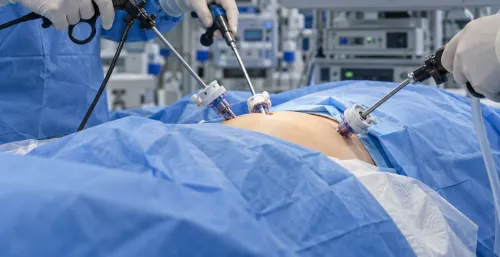
The laparoscopic appendectomy decision depends on visibility, infection, and safety—not a slogan about small incisions.
| Option | What it means | When it applies |
|---|---|---|
| Laparoscopic appendectomy | Removal through camera-assisted ports | Safe anatomy, manageable inflammation, and adequate source control |
| Open appendectomy | Removal through a larger incision | Extensive perforation or infection, previous operations, dense adhesions, or anatomy that cannot be identified safely |
| Conversion to open surgery | Starting laparoscopically, then changing approach | Bleeding, severe inflammation, unexpected anatomy, or inability to protect bowel and nearby organs |
Conversion to open surgery is a safety decision, not a failed operation. A specialist assessment helps match imaging and operative findings to the safest route. Dr Mayur Porwal 08042753618 provides gastrointestinal and advanced laparoscopic surgical assessment in Navi Mumbai, where you can discuss anatomy, source control, and whether an open appendectomy is safer.
Related service
Laparoscopic appendix surgery Laparoscopic appendectomy is a minimally invasive surgery to remove an inflamed or infected appendix, usually due to appendicitis. View service → |
What happens in hospital and during recovery after the decision?
The appendectomy hospital process starts with surgical review, fasting, intravenous fluids, and antibiotics when indicated. Consent covers the planned operation and possible changes. An anaesthesia assessment checks your medical history, medicines, and airway risks. During appendectomy, surgeons remove the appendix, usually laparoscopically. Appendix pathology examines the specimen for inflammation and unexpected disease.
Appendectomy recovery usually allows discharge when vital signs are stable, pain is controlled with oral medicine, you can drink and pass urine, and there is no concern about infection. For appendectomy wound care, keep dressings clean and follow instructions about showering; avoid heavy lifting until the surgical team permits it.
Return gradually to school or work, using the team’s advice for return to work after appendectomy. Drink fluids, eat fibre, or use a prescribed stool softener to prevent constipation after surgery.
Seek urgent review for these appendectomy warning signs:
- Fever or increasing pain
- Pus, wound separation, faintness, or persistent vomiting
- Worsening abdominal swelling
Delaying needed source control increases appendectomy complications, including perforation, abscess, sepsis, repeat admission, antibiotic failure, recurrent appendicitis, and a more difficult operation.
Frequently asked questions
How do doctors confirm acute appendicitis?
Doctors combine your symptoms, abdominal examination, temperature and pulse observations, blood tests, urine testing, and imaging such as ultrasound or CT. No single result confirms or excludes appendicitis in every patient.
When does appendicitis require immediate surgery?
Immediate appendectomy is usually needed when imaging or examination indicates perforation, widespread peritonitis, worsening sepsis, an obstructed appendix, or deterioration despite treatment.
Can antibiotics replace appendectomy for appendicitis?
Antibiotics can replace immediate surgery for selected patients with uncomplicated appendicitis, meaning no perforation, abscess, obstruction, or appendicolith. You need imaging, surgical assessment, and follow-up because appendicitis can recur or fail to settle.
How are an appendiceal abscess and high-risk patients treated?
An abscess often requires intravenous antibiotics and image-guided drainage rather than immediate surgery. Age, pregnancy, frailty, heart or lung disease, blood-thinning medicines, and previous abdominal operations can change the safest plan.