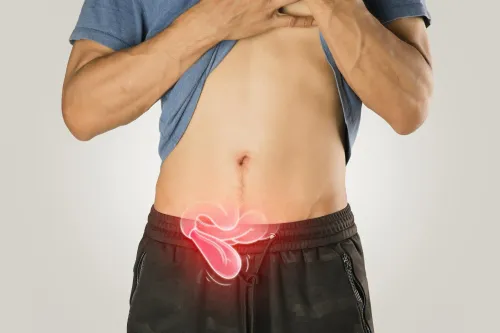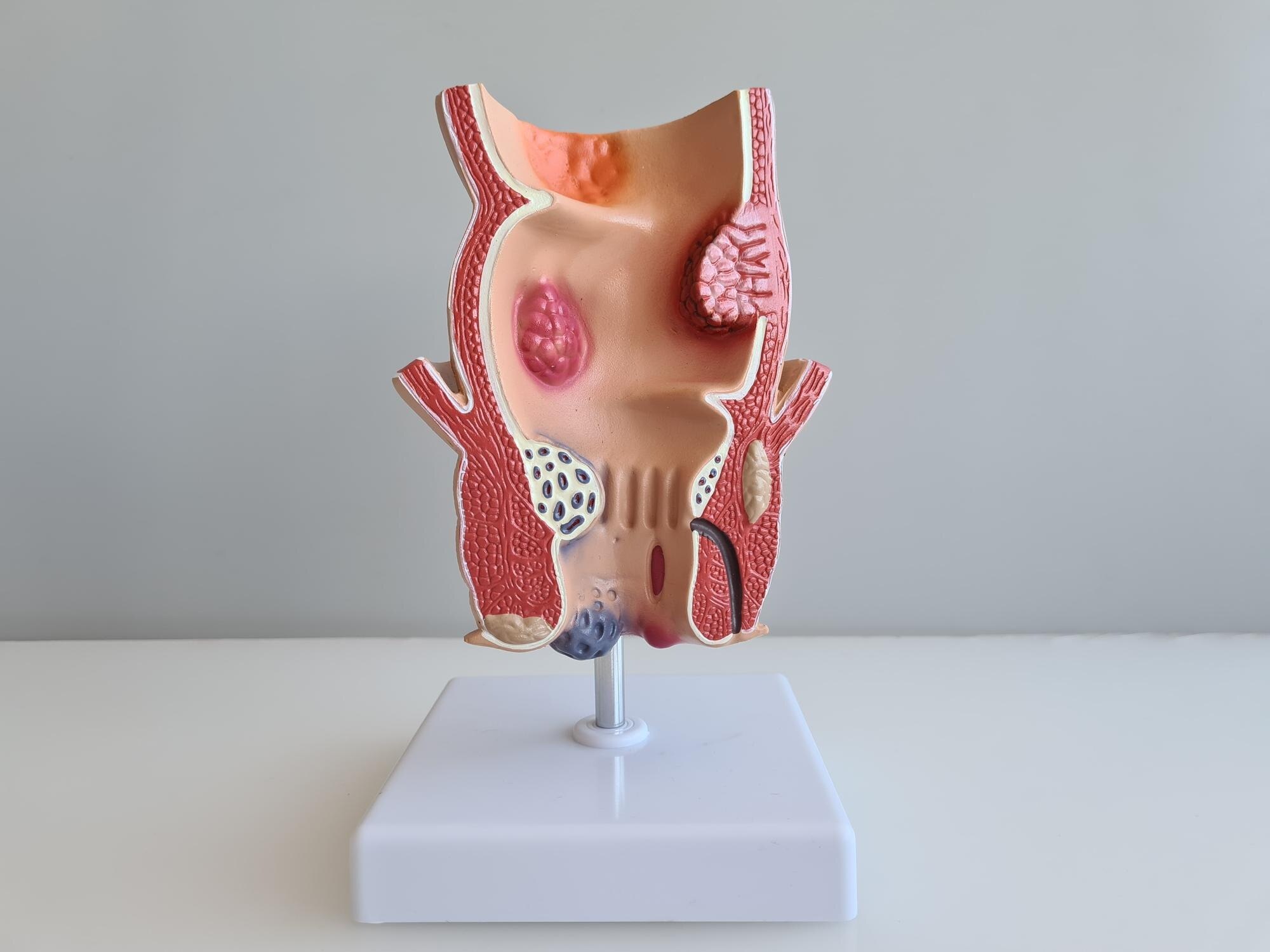
Bleeding, a lump, itching, leakage, or pain around the anus does not automatically mean you need an operation. By matching each symptom with the type of anorectal problem it suggests, you can recognise when to seek urgent care, when to book an assessment, and when surgery is more likely to enter the discussion.
Key takeaways
- Arrange assessment for recurring bright-red rectal bleeding.
- Seek prompt care for heavy bleeding, severe pain, fever, or a painful lump.
- Grade 3 or 4 hemorrhoids often require a surgery discussion.
- Expect an examination and possible tests to identify the bleeding source.
Which symptoms suggest prolapsing or complicated piles?
Persistent bright-red bleeding on toilet paper, in the bowl, or coating the stool deserves assessment when it keeps returning. A soft, usually painless bulge that appears during a bowel movement and returns by itself fits internal hemorrhoids more closely.
Prolapsing tissue that needs manual reduction or remains outside is more concerning for advanced prolapse and possible piles surgery assessment.
Mucus leakage, incomplete evacuation, itching, irritation, difficulty cleaning, or trouble sitting and passing stool can accompany prolapse, but none proves that surgery is needed. Arrange assessment when bleeding recurs, prolapse stays outside, pain is severe, or symptoms disrupt ordinary activities.
| Finding | More likely explanation | Why assessment matters |
|---|---|---|
| Soft bulge with bleeding | Internal hemorrhoids | Prolapse severity and bleeding source need confirmation |
| Sudden, tender lump at the anal edge | Thrombosed external hemorrhoid | Treatment differs from elective internal hemorrhoid surgery |
| Severe constant pain | Thrombosis, anal fissure, abscess, fistula, strangulation, or another diagnosis | This is less typical of uncomplicated internal hemorrhoids and needs examination |
| Mucus, leakage, or incomplete emptying | Prolapsing hemorrhoids, rectal prolapse, or a pelvic-floor disorder | Symptoms overlap, so examination must identify the cause |
Do not assume every bleeding or cleaning problem is piles. A clinician may need to examine the anus and rectum before recommending an operation, particularly when symptoms persist or interfere with ordinary activities.
When bleeding or pain needs prompt medical care
Heavy bleeding or continuous bleeding is an urgent problem, not a routine appointment for elective piles surgery. Seek prompt medical care if you have:
- Dizziness, fainting, weakness, or breathlessness with bleeding, which can signal significant blood loss.
- Black or maroon stools, which can indicate bleeding higher in the gastrointestinal tract.
- Fever with anal pain or swelling, fever and pus, or worsening tenderness, which can indicate an infection or abscess.
- A painful prolapse that cannot be pushed back, which can indicate strangulation of the tissue.
- Inability to pass stool or urine, which requires urgent assessment.
Painless rectal bleeding still needs evaluation. Colorectal polyps, colorectal cancer, inflammatory bowel disease, anal fissures, diverticular bleeding, and other gastrointestinal conditions can mimic piles. Arrange medical assessment for persistent, recurrent, or unexplained blood; do not proceed directly to hemorrhoid surgery before competing causes have been examined.
A suddenly painful, tender lump at the anal margin is a separate decision from long-standing internal hemorrhoids. It may be a thrombosed external hemorrhoid. Selected patients with severe symptoms benefit from early treatment, often within about 72 hours, while later or milder cases may not need immediate excision.
Severe constant pain also warrants examination because an abscess, fissure, strangulation, or another anorectal condition can look like piles.
How hemorrhoid grades influence the surgery discussion
The grade describes how internal hemorrhoids behave, not whether you definitely need surgery. Grade I hemorrhoids bleed or swell inside the anal canal without prolapsing. Grade II hemorrhoids protrude during straining but return inside on their own.
Grade III hemorrhoids protrude and require a finger to push them back. Grade IV hemorrhoids remain outside and cannot be reduced. Grade III or IV prolapse is more likely to lead to an operation, but grade alone does not decide treatment.
A practical surgery discussion starts when symptoms continue after a defined trial of fiber, fluids, avoiding straining and prolonged toilet sitting, and suitable office treatment. Persistent bleeding or prolapse after rubber-band ligation, infrared coagulation or sclerotherapy can justify discussing surgery.
- Rubber-band ligation mainly treats internal hemorrhoids, especially grades I and II and selected grade III cases.
- Rubber-band ligation does not remove a large external component.
- Large external hemorrhoids, a mixed internal-and-external mass, or a persistent external skin-and-tissue lump can make excisional hemorrhoidectomy more suitable.
- Symptoms alone do not guarantee surgery; examination must confirm that hemorrhoids cause the problem and that another condition is not responsible.
The decision also weighs bleeding frequency, prolapse, cleaning difficulty, leakage and response to treatment. A lower grade with persistent, disruptive symptoms can require more attention than a higher grade causing little trouble.
What happens during an assessment for bleeding or prolapse?
The clinician confirms piles by matching your symptoms with examination findings and checking whether bleeding has caused anemia. The history covers:
- Bright-red or dark blood, how often it appears, and whether it coats stool, paper, or the bowl.
- Prolapse, whether tissue returns by itself, needs manual reduction, or stays outside.
- Bowel habits, straining, constipation, diarrhoea, pain pattern, mucus, leakage, and incomplete emptying.
- Weight loss, family history of bowel disease or cancer, anticoagulants and other medicines, and previous treatments.
Inspection of the anal margin can reveal a fissure, thrombosed external hemorrhoid, swelling, fistula opening, or prolapsed tissue. A digital rectal examination checks tenderness, masses, sphincter tone, and other rectal abnormalities. Anoscopy then lets the clinician view the anal canal and internal hemorrhoids directly.
| Test | What it checks | When it enters the plan |
|---|---|---|
| Complete blood count | Falling haemoglobin and anemia | Recurrent bleeding or fatigue with weakness, breathlessness, palpitations, or reduced exercise tolerance |
| Iron studies | Iron deficiency from chronic blood loss | Suspected iron-deficiency anemia |
| Colonoscopy or another bowel test | Polyps, cancer, inflammatory disease, or another bleeding source | Unexplained or recurrent bleeding, anemia, changed bowel habits, weight loss, family history, age and screening risk, or findings that do not fit hemorrhoids |
Iron-deficiency anemia attributed to rectal bleeding requires a search for the source, not automatic piles surgery. In Navi Mumbai, Dr Mayur Porwal 08042753618 provides specialist gastrointestinal and colorectal assessment, where examination comes before choosing an operation.
Related services
piles and fissure surgery Piles (Hemorrhoids) and Fissures (Anal Fissures) are common anorectal conditions that can cause pain, bleeding, and discomfort. View service → |
Laparoscopic Colorectal Surgery Laparoscopic Colorectal Surgery Colorectal surgery refers to surgical procedures performed on the colon, rectum, and anus. View service → |
What surgery can and cannot solve—and when to discuss it
Surgery treats the hemorrhoid problem found on examination, not unexplained bleeding or every anal symptom. Excisional hemorrhoidectomy suits substantial prolapse, recurrent disease, or a prominent external or mixed component. Its surgical risks and recovery include more pain than office procedures, temporary urinary retention, bleeding, and constipation; rare longer-term complications include anal stenosis or impaired continence.
| Option | Main benefit | Important limitation |
|---|---|---|
| Excisional hemorrhoidectomy | Removes substantial internal, external, or mixed disease | More painful recovery and the complications listed above |
| Stapled hemorrhoidopexy | Less early postoperative pain | Higher recurrent-prolapse risk and no treatment for prominent external disease |
| Office treatment | Less invasive treatment for selected internal hemorrhoids | May not control persistent prolapse or a large external component |
Less pain does not make stapled hemorrhoidopexy the best choice for everyone. Elective surgery for long-standing internal hemorrhoids is also different from urgent treatment of a thrombosed external hemorrhoid, abscess, strangulated prolapse, or fistula; severe constant pain needs examination before elective surgery is chosen.
Seek urgent care for heavy or continuous bleeding, dizziness or fainting, black or maroon stools, fever with anal swelling, pus, a painful prolapse that cannot be pushed back, or inability to pass stool or urine.
Book an assessment for recurrent bleeding, tissue needing manual reduction, tissue remaining outside, leakage or cleaning problems, or symptoms continuing after a defined treatment trial. Do not choose piles surgery until fissure, abscess, fistula, rectal prolapse, polyps, cancer, and other competing causes have been examined.
Frequently asked questions
Which symptoms suggest prolapsing or complicated piles?
A bulge that returns by itself suggests prolapsing internal hemorrhoids. A bulge requiring manual replacement, a permanently protruding mass, persistent irritation, or difficulty cleaning needs medical assessment.
When does bleeding or pain from piles need prompt medical care?
Seek prompt care for heavy or repeated bleeding, dizziness, black stools, severe or rapidly worsening pain, fever, pus, or a painful lump. Do not assume every episode of rectal bleeding is caused by piles.
How do hemorrhoid grades influence the surgery discussion?
Grade 1 hemorrhoids do not prolapse. Grade 2 prolapse during straining but return alone. Grade 3 needs manual replacement, while grade 4 remains prolapsed; grades 3 and 4 more often lead to a discussion about procedures or surgery.
What happens during an assessment for bleeding or prolapse?
A clinician asks about bleeding, bowel habits, pain, prolapse, medicines, and family history, then examines the anal area. A digital rectal examination and anoscopy may identify hemorrhoids; further tests are chosen when another bleeding source needs investigation.